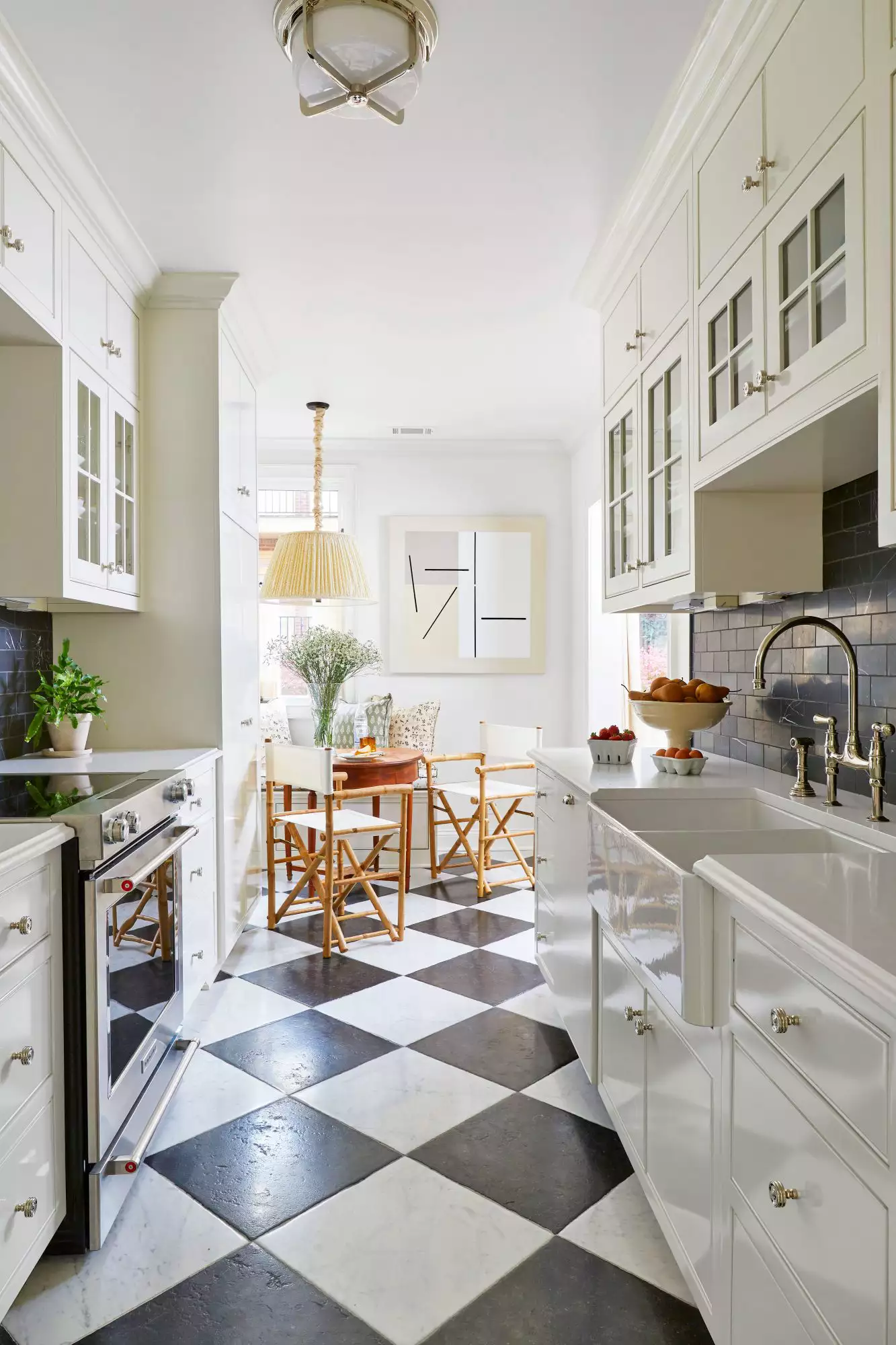
We all desire our kitchens to look excellent, however what use is a pretty cooking area that does not work? Interior designer Lisa Shaffer states that the most practical kitchen is a tailored one. If you’re preparing (or dreaming) of a cooking area remodel, require time to think about how you and your family live in the area and utilize the kitchen before entering the nitty gritty.
” We think the most functional kitchen area is the one that works for the method you live,” Shaffer says. “We have developed the smallest of galley cooking areas and the biggest of cooking areas with back kitchens and walk-in pantries.
Often, crafting the most functional kitchen might indicate breaking the guidelines, she says. Old-school rules for cooking area style aren’t the end-all-be-all. Rather, house owners and interior designers can take imaginative license to piece together a space that matches those who will be using it.
” So much of what we think of function in a kitchen is dated,” highlights Shaffer. “I keep in mind being a kid and jumping on the counter to reach a glass just for a glass of water, and no one ever thought to put the glasses in a lower cabinet for simple gain access to. The best function will happen out of analyzing the requirements of each client.”
Still, you should not throw all the eliminate the window. To help sort what can remain from what should go, a few of the South’s leading designers have actually laid out their finest guidelines for creating a functional cooking area– consisting of attempted and true practices, and brand-new, more useful credos that upgrade believing from the past.
Function Over Form
When it boils down to it, interior designers worry the requirement to prioritize function over beauty. Don’t get involved the looks of your kitchen area and leave usefulness doing not have, or yet another remodel might impend before the dust has even decided on this one.
” Good kitchen area style incorporates both type and function, but if I find myself in a scenario where I need to focus on one over the other, function always wins,” says designer Courtney Thomas. “It’s essential for effectiveness, and when it boils down to it, it does not matter how beautiful a space is if it does not work for you.”
Kitchens Aren’t Just for Cooking
Nowadays, kitchens aren’t simply a place for a mother or host to be concealed away while they prepare food in isolation. Rather, cooking areas tend to be lively spaces that allow for conversation while cooking. Typically, folks these days also utilize their cooking areas for consuming and even amusing. It all goes back to being self-aware of how you use the space, as Shaffer stated, and molding a multi-purposed area to match those requirements.
” Kitchens aren’t simply for cooking– they’re the heart of your home,” says Thomas. “When you’re thinking about a design, focus on how you’ll utilize the space.
Light Bright
For both style and function, kitchen lighting is of important value. In truth, excellent lighting will increase function by expanding the possibility for multiple usages. For instance, with sufficient lighting, a kitchen can likewise serve as a research station or office.
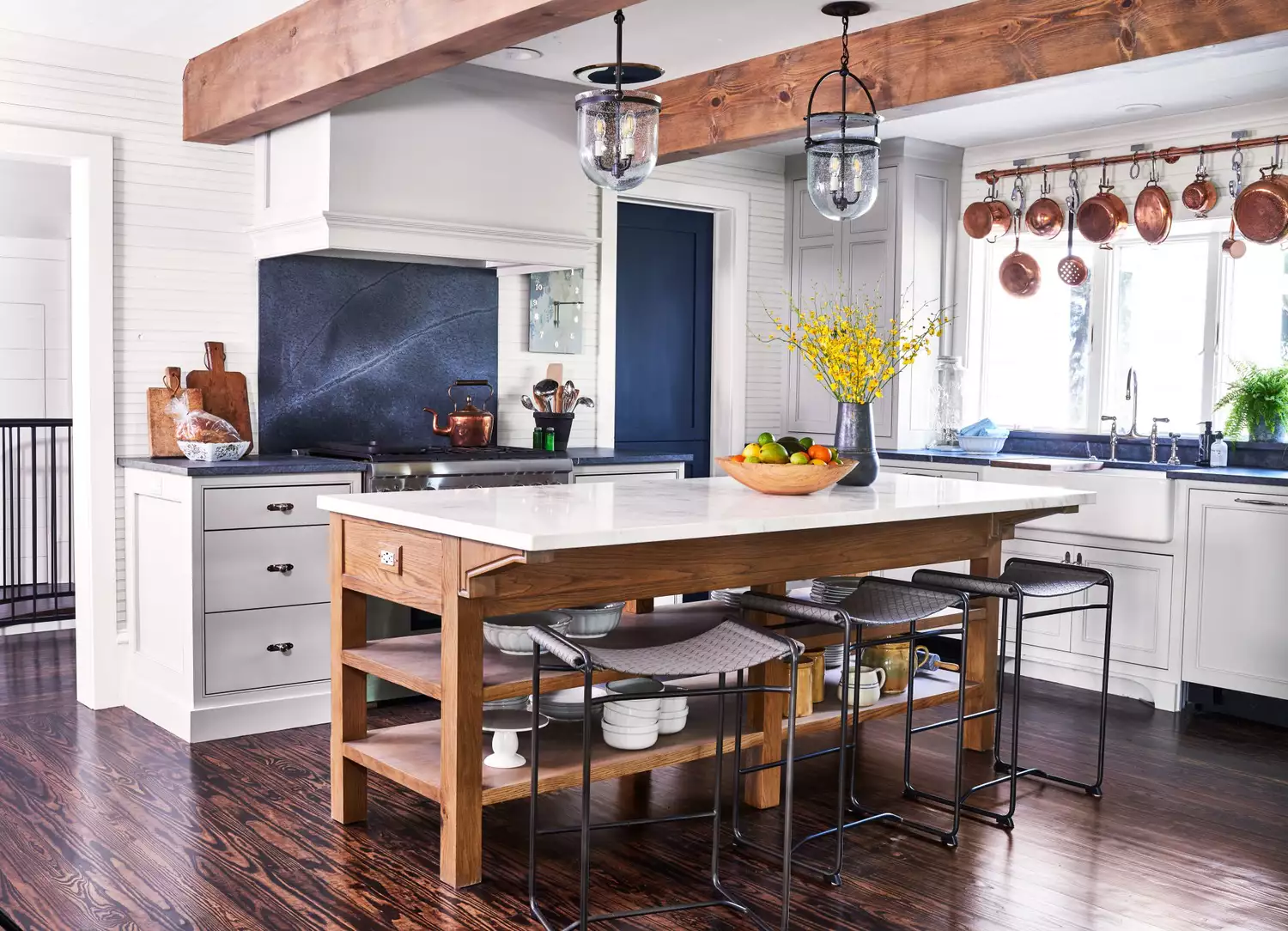
” Kitchens are an area for doing tasks and not just cooking jobs. Do not forget the lighting,” states interior designer Mary Tobias Miller. “Put pendants or a direct fixture over the island. Put cans in the ceiling and include under cabinets and over the sink lighting if your spending plan enables.”
She also recommends keeping lights on a dimmer and adhering to warm lightbulbs in the kitchen. Significantly, Miller points to lights as a top priority for function, but also an opportunity to incorporate significant kitchen style.
Forget the “Kitchen Triangle”
In the old-school rulebook for kitchen area design, the cooking area triangle is most likely in the very first chapter. Designers advise wandering off from this precedent.
” The ‘kitchen area triangle’ is an olden guideline of design, where the circulation of the cooking area is based around the ‘triangle’ shape produced by the area of the sink, variety, and fridge,” explains Thomas. “Since modern kitchens are multi-purpose areas, we’re typically pressing beyond the triangle principle.”
Shaffer and interior designer JuliAnne Kelly concur that the cooking area triangle isn’t everything. That isn’t to say there isn’t a location for a triangle kitchen, but at the same time, it’s not the only option. Kelly says that focusing steadfastly on producing a kitchen area triangle, even if it does not line up with the practical use of your kitchen, is a common mistake she sees clients making.
” Sometimes people get so caught up in the working triangle and having whatever close together,” she states. “Kitchens tend to be bigger these days, and I believe having the highlights expanded helps balance both the look and flow of a kitchen.”
You Can Never Have Too Many Drawers
“We’ve seen increased interest from customers to develop more drawer banks on the lower kitchen area cabinets. If you prefer the look of cabinets, you can have the racks slide out like drawers so you can easily access items tucked in the back.”
No Inch Left Behind
She now calls Charlotte, North Carolina home, Miller started her career in New York City, where space is even more of a hot commodity. There, she discovered how to make the most of every bit of kitchen area; today, she brings these lessons with her to homes throughout the South.
To make the most of offered kitchen area cabinet area, Miller advises installing full extension hardware which allows you to open a drawer all the way out so that nothing can get lost in the back. Additionally, cabinets are most functional, she says, when their size is customized to suit the property owner’s storage needs. By doing this, there aren’t too large margins surrounding plates, trays, and other cabinet inclusions, that could add up to helpful area.
To save valuable counter area, Miller likewise recommends taking spots to match needs. Instead of giving typical wrongdoers a put on top of the counter, she encourages: “You can develop specific niches in the wall or little shelves adjacent to the cooktop that are particularly for olive oils, spices, and utensils regularly utilized.” This will not just save counter tops, however likewise increase function by permitting home cooks to keep their most-used active ingredients within arm’s reach of where they’ll need them.
Surround the Island with Space
When someone is packing the dishwasher and another individual is putting food in the oven, that space rapidly feels tight. I always recommend a minimum of 52 inches between and push for more if there is space in the design.”
Find Appliances a Home
At the leading edge of designers’ minds is what to do with all those cooking area appliances. There are a lot of to be had these days, and if you’re not mindful, home appliances can completely commandeer your counter tops. Small home appliances need to be stored away, in an “device garage” in close-to-reach cabinets, Kelly states. For larger appliances that can’t be as easily hidden, thoughtful placement is important– to both function and security.
” Appliances have come a long method but I would not put an oven beside a fridge for fear of exhausting the cooling system,” states Miller. “I likewise would not put a cooktop on the edge of a counter. It’s too simple for little hands to reach the hot top.”
According to Shaffer, another appliance plan to consider is the relationship between the fridge and microwave placement. Having them right in the middle of things could be a mistake, she states.
” These are usually the most used home appliances,” Shaffer explains, “and keeping them far from the cooking area ensures the whole household can work in the area without being on top of one another.”