Whether you just bought a brand-new house and are picking flooring alternatives, or are prepared to renovate your home floors, picking the very best flooring alternative for your lifestyle and budget might be a bit difficult. Laminate and vinyl floor covering are 2 types of popular flooring choices that many house owners have actually been installing, but both are a bit different in terms of their composition, sturdiness, restrictions, and more.
Below, we connected to Jen Meska, Head of Merchandising at LL Flooring in Richmond, Virginia, for her insight on all things laminate vs. vinyl floor covering. Read on to find out which alternative is best for you and your home.
Summary of Laminate Flooring
Laminate floor covering is composed of three layers: first, wood fiber and resin are combined under extreme heat and pressure to develop a high-density, dent-resistant core. Then, the printed image is fused on top of the core– this supplies the visual appearance of the floor. On top is a wear layer, a clear top covering that supplies severe scratch resistance. This is frequently marked with a textures plate to offer the realistic appearance of wood grain texture that you can see and feel.
According to Meska, laminate floor covering is a go-to option for homes with a great deal of traffic or regular activity. “Between the ease of cleansing, its scratch- and dent-resistance, and its economical price tag, these floorings are reputable and strong, and don’t need lots of regular maintenance or deep cleansing,” she says. “Regular sweeping or vacuuming, with occasional mopping, will extend the life of laminate floors and keep them looking as good as the day they were installed.”
Laminate is an extremely resistant flooring that uses a lot of benefits, however there are disadvantages, too. Because laminates utilize a photographic layer adhered to the core, that layer can’t be refinished in cases of damage, unlike floors like strong or engineered hardwood, which can be refinished to provide a longer life expectancy.
Overview of Vinyl Flooring
Vinyl is composed of a synthetic product known for its sturdiness, water resistant security, and simple upkeep. Comparable to laminate, a printed layer is adhered to the compressed rigid core, topped with a clear wear layer that secures from surface area scratches or damages. It’s likewise easy to clean, needing just a routine sweeping and a periodic damp mop, according to Meska.
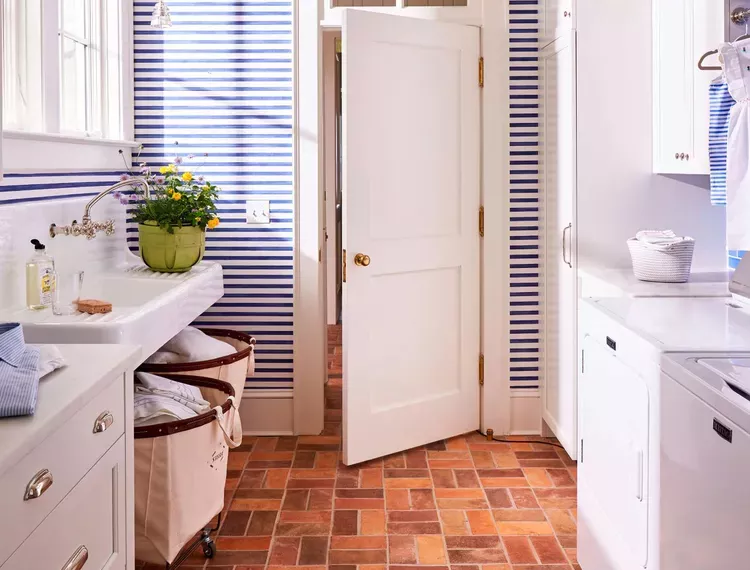
Vinyl flooring is extensively popular among property owners for being waterproof, scratch-resistant, affordable, and easy to install. It’s also loved for its practical wood-like appearance– it provides the natural appeal of wood flooring with the cost and sturdiness of vinyl. “Vinyl is a terrific floor type for more humid climates and any space of the home, particularly moisture-prone locations like mudrooms, kitchen areas, or restrooms,” states Meska.
Like laminate, vinyl is a high-performing flooring with loads of benefits, but also like laminate, vinyl’s photographic top layer can not be refinished or sanded down like wood, making it tough to fix in cases of damage. “The service to this is to always look after your floors– no floor is unbreakable, and property owners can avoid triggering significant damage by practicing fundamental maintenance, using furniture pads, and rapidly tidying up spills,” recommends Meska.
Comparison of Laminate and Vinyl Flooring
Similarities
Laminate and vinyl floorings share a great deal of resemblances in their structure, cost, and upkeep. They’re both crafted from extremely compressed cores, finished with a photo layer that can provide a range of trendy appearances, and a clear wear layer that offers scratch and damage defense.
” Both of these floors likewise come at a lower expense than their hardwood counterparts, making them economical options that homeowners love,” states Meska. “They’re similarly easy to keep clean, needing a routine sweeping to eliminate surface dirt and an occasional wet mop to remove finer particles.”
Lifespan
The total life-span of vinyl will really depend on the level of upkeep and regular use over time. “It’s crucial to highlight that the life expectancy actually depends on the use of the floor and care– vinyl is excellent at securing against scratches and dents, and all of LL Flooring’s vinyl is water resistant, making it easier to keep wetness from causing damage to the planks,” discusses Meska.
The life expectancy of laminate is quite similar. Laminate flooring can also last as much as 25 years, but if it’s not appropriately maintained, it might just last between five and 10 years, sadly.
Setup Process and Maintenance
Both laminate and vinyl are great DIY options and many individuals turn to them for that reason. Both floors are typically readily available with an easy click-and-lock system of setup that does not require a glue-down or nail-down set up. “It’s likewise worth noting that there are less tools needed for vinyl setup: cutting laminate planks requires a circular saw or table saw (and the needed experience to match), while vinyl slabs can be cut with simply a small utility knife,” says Meska, though she suggests a flooring cutter for larger jobs.
What’s so fantastic about laminate and vinyl is they both are easy to keep and look after. Offered their strong building and protective wear layer, these floors are highly scratch-resistant, and all vinyl floorings are waterproof.
As an outcome, you can use vacuums and brooms, in addition to wet, jet, or steam mops to keep them clean without worry of damage– though it’s always best practice to avoid big quantities of water and constantly seek advice from the flooring care guide for your particular floor, according to Meska. For finest results, use a floor-specific cleaner to guarantee a streak-free surface without any waxy residue accumulation discovered in some household cleaners.
To care for your vinyl or laminate floors, your best bet is to start by sweeping or vacuuming your flooring to remove fine particles of grit that act like sandpaper and might dull your floors. For each action, it’s finest to start at one end of your floor and work in a consistent direction to avoid just moving dirt around the flooring.
It is important to keep in mind that you ought to never utilize wax or oil on your laminate or vinyl floorings, as the residue from these items can dull the surface of the floor. If a stain happens, never ever use nail polish remover or acetone to attempt and remove it, as these can harm your floors permanently. Utilizing a floor-specific cleaner, a microfiber rag, and a little effort must get rid of any stain you come across.
” The bottom line: routine sweeping or vacuuming, with periodic mopping, will extend the life of your floor and keep it looking as great as the day it was installed,” says Meska.
Expense and Affordability
Both laminate and vinyl are pretty comparable in regards to cost. “At LL Flooring, our laminate and vinyl floorings are both matched in cost, generally varying from $0.69–$ 3.99 per square foot for laminate and $1.69–$ 4.99 per square foot for vinyl,” explains Meska. “That fairly low expense for a high level of quality and the lovely, natural look is a big reason that house owners flock to both floorings.” What’s so cool about both these kinds of floor covering is that they each offer a hyper-realistic look of true wood, while offering a lower cost for high-performance floorings that can stand up to daily wear and tear.
Visual Options
” Our customers are frequently impressed when they see floorings that are vinyl or laminate due to the fact that today’s printing innovation can make these floorings look much like genuine hardwood, stone, or tile, providing intricate and stylish patterns that carefully imitate the look of true natural products,” says Meska. “In many cases, they likewise feel authentic underfoot with their textures, which is another benefit.” There are numerous looks individuals can choose when it concerns laminate and vinyl designs.
Nevertheless, laminate flooring does tend to look a little bit more premium than vinyl. This is because laminate can be found in many various colors, woods, stones, and more.
Considerations for Choosing Between Laminate and Vinyl Flooring
According to Meska, today’s laminate has actually come a long method– it’s not your grandmother’s floor covering anymore. “While many homeowners like to put waterproof laminate in mudrooms, restrooms, and basements, we are seeing customers bring them even more into their home, particularly because they also stand up to family traffic provided their tough, scratch-resistant qualities,” describes Meska.
However, vinyl is known for its hard water resistant exterior, and may be a much better option for folks in wetter environments, or in areas of your home that seem to get wet more easily (like the restroom or mudroom). It’s an excellent flooring option for folks who have kids, pets, or handle a lot of spills and require a floor that can hold up against these.
Both of these kinds of flooring are pretty scratch-resistant, but similar to most floors, they aren’t totally indestructible. “Due to the protective layer that covers these floors, a number of these floorings will provide outstanding scratch-resistance, making them excellent for busy families, plus for animals,” explains Meska. When going through any flooring selection journey, it’s always important to speak with your floor covering retailer to comprehend your flooring choice’s qualities, how your flooring will perform, and what’s best for your way of life and home.”